

The primary function of a Heavy Drop Container/Air-Land Container/Airdrop Container is to protect, transport, and organize sensitive 19-inch electronic equipment in a professional environment. It serves as a mobile fortress, ensuring that gear remains operational and undamaged during transit and setup.
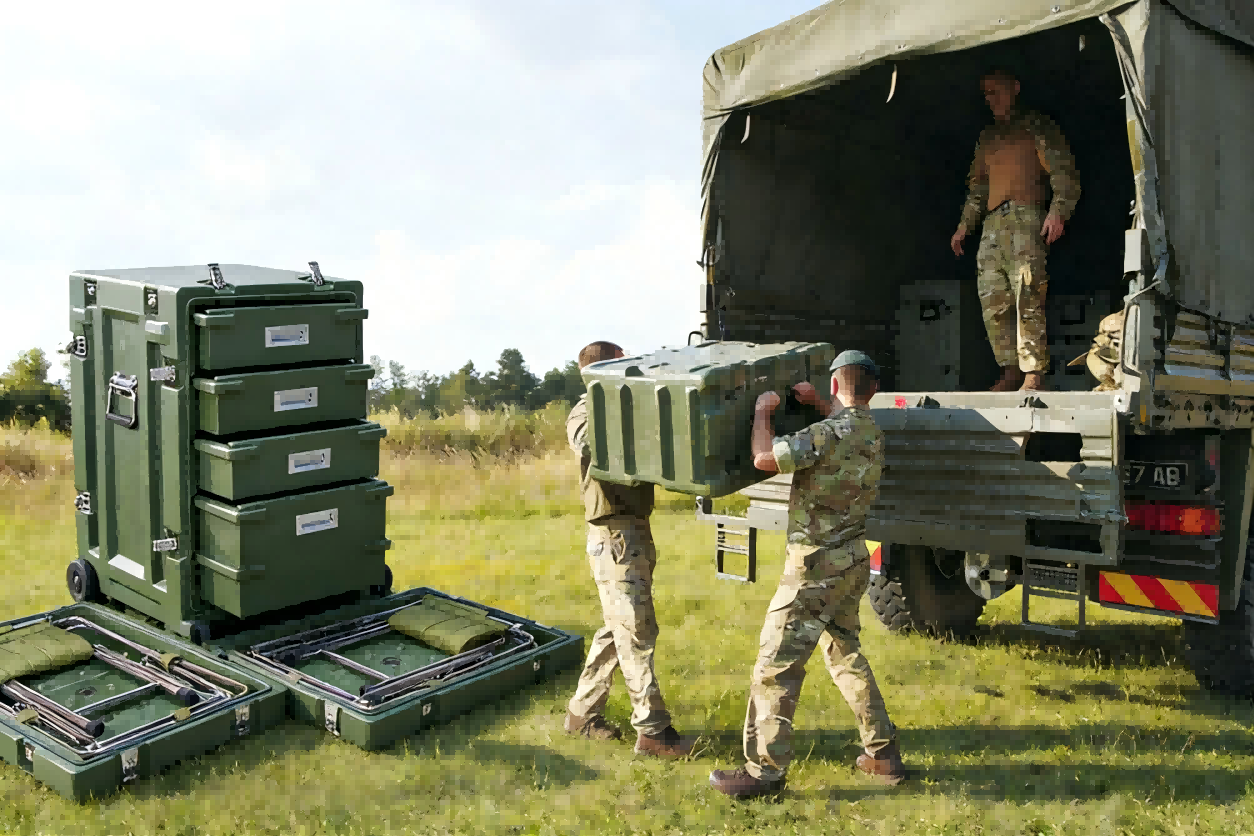
- Shock Absorption:It protects internal components (like amplifiers or mixers) from vibrations, bumps, and drops.
- Environmental Protection: It seals out moisture, dust, and dirt to keep electronics dry and clean.
- Organization: It mounts equipment securely using standard front/rear rack rails, keeping cables and components neatly arranged.
- Mobility: It enables heavy or sensitive gear to be moved safely from one location to another (e.g., from a warehouse to a concert venue).
These features highlight the physical construction and design elements that make the case durable.
- Seamless Double-Wall Construction: Made via rotational molding, the case has no seams or corners where stress cracks usually start. It features a hollow "double-wall" design that acts like a built-in shock absorber.
- Heavy-Duty Latches: Equipped with industrial-grade butterfly or draw latches, often made of steel or reinforced nylon, which keep the lid tightly closed and usually include padlock holes for security.
- Reinforced Corners & Edges: The corners are the thickest part of the case, designed to absorb the hardest impacts during travel.
- Recessed Hardware: Handles and latches are recessed into the case body, meaning they won't snap off if the case rolls over or hits a doorway.
- Airline Shipping (ATA) Spec: Most are designed to meet Air Transport Association (ATA) Specification 300, Category 1, meaning they can withstand the rough handling of commercial air freight.
- Pressure Relief Valve: Often includes an automatic "breather" valve to equalize air pressure (preventing the case from being impossible to open after altitude changes on a plane) while keeping water out.

You will typically find rotomolded rack cases in professional "live sound" and "staging" environments.
1.Live Music Touring: Transporting guitar amp heads, wireless microphone receivers, and in-ear monitor systems on tour buses and trucks.
2.Corporate Events & Conferences: Housing video matrix switchers, lighting controllers, and digital mixing consoles that are set up and torn down daily in hotels and convention centers.
3.Broadcast & Field Production (ENG): Used by news crews to transport portable video decks, monitors, and signal converters to remote broadcast locations (sports events, news scenes).
4.Rental Houses (AV Rentals): Rental companies use these to house expensive gear that gets rented out to different clients, ensuring the equipment survives the rental cycle.
5.House of Worship: Churches use them to secure audio and video equipment that may need to be stored away when not in use to protect from dust and theft.
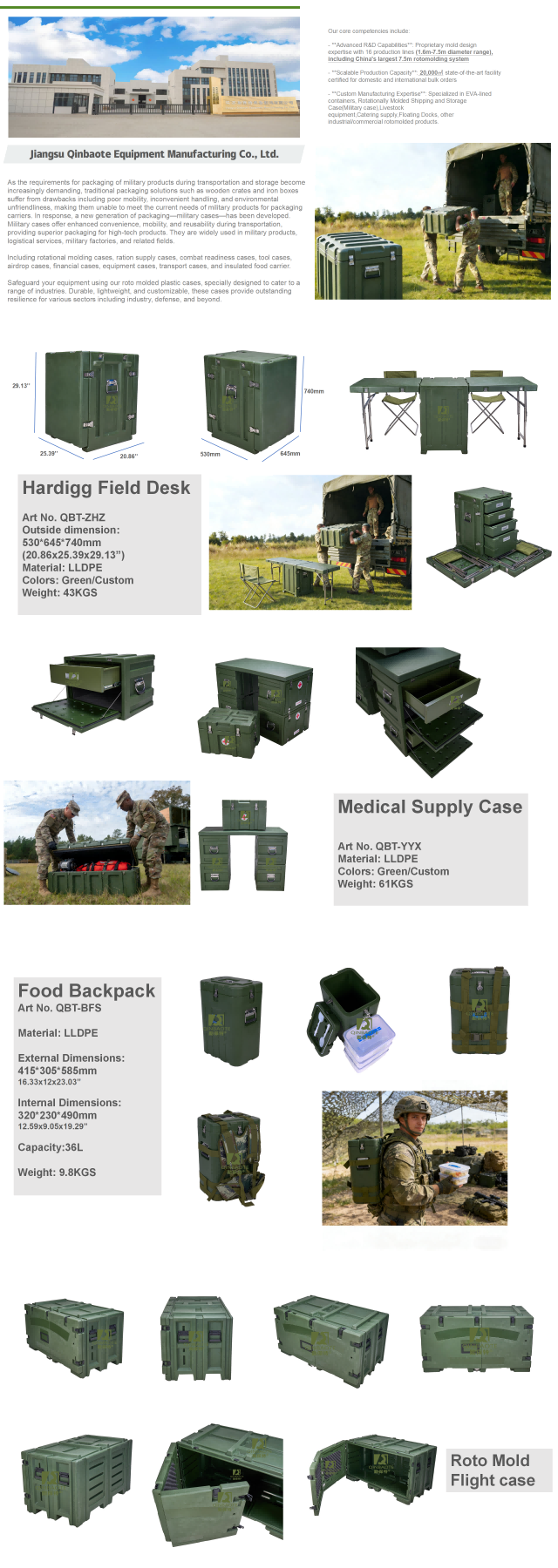
Here is our related rotomolded case for you checking.
Carrying case QBT25521595, Rotational Molding Cases QBT865 ,Rotomolded Safety Cases QBT1288,Flat Screen LCD TV Shipping Cases QBT-DAG,Rotomolded Long Gun Case QBT1374421,Foldable Field Desk,Premium Medium Plastic Rotomold Case QBT1866.