

Rotational molding (Rotomolding or Rotomoulding) has evolved from a niche plastics manufacturing process into one of the most versatile production technologies for large, hollow, seamless plastic products. Thanks to its low tooling cost, excellent design flexibility, and ability to manufacture durable products with uniform wall thickness, rotational molding has become an important manufacturing solution across agriculture, construction, medical, defense, material handling, automotive, marine, and food service industries.
According to discussions presented by the Association of Rotational Molders (ARM), major European Rotomoulding conferences, leading material suppliers, and industry manufacturers, the next decade will be defined by sustainability, digital manufacturing, advanced materials, automation, and high-value customized applications rather than simply increasing production volume.
1.Sustainability Will Become the Core Competitive Advantage
Environmental regulations and customer expectations are fundamentally changing the rotational molding industry.
Historically, virgin polyethylene (PE) has dominated the market. However, manufacturers are increasingly adopting:
- Recycled polyethylene (rPE)
- Circular polymers
- Bio-based resins
- Low-carbon raw materials
- Recyclable product designs
Major resin suppliers are investing heavily in circular polymer technologies while helping rotomolders maintain product performance. Future product development will focus not only on durability but also on recyclability and lower carbon emissions throughout the product life cycle.
Future customers especially in Europe and North America—will increasingly evaluate suppliers based on sustainability certifications, carbon footprint reduction, and environmentally responsible manufacturing.
2.Smart Manufacturing and Industry 4.0
Digital transformation is rapidly entering rotational molding factories.
Modern equipment is evolving from simple heating and cooling systems into intelligent production platforms capable of:
- Real-time process monitoring
- Mold temperature sensing
- Automatic cycle optimization
- Machine data collection
- Predictive maintenance
- Cloud-based production management
Industry experts are demonstrating how digital twins, AI-assisted process optimization, and machine learning can reduce cycle times, improve part consistency, and significantly increase Overall Equipment Effectiveness (OEE).
Factories that embrace Industry 4.0 technologies will gain significant advantages in quality control, energy efficiency, and production stability.

3.Automation Will Solve Labor Challenges
Unlike injection molding, rotational molding still relies heavily on manual operations such as:
- Mold loading
- Mold closing
- Part demolding
- Trimming
- Assembly
- Material handling
The next generation of factories will increasingly incorporate:
- Robotic loading systems
- Automatic mold clamping
- Automated powder dispensing
- Robotic trimming
- Conveyor integration
- Collaborative robots (Cobots)
Automation reduces labor costs while improving consistency and workplace safety. Equipment manufacturers are already introducing fully automated production cells capable of integrating molding, cooling, demolding, and finishing into a continuous workflow.
4. Advanced Engineering Materials Will Expand New Markets
For decades, polyethylene has been the standard material in rotational molding.
Future growth will increasingly depend on engineering-grade materials such as:
- Polyamide (PA6, PA11, PA12)
- Cross-linked polyethylene (XLPE)
- Flame-retardant compounds
- UV-resistant materials
- Antistatic materials
- Conductive polymers
- High-temperature polymers
These materials allow rotational molding to enter industries with higher technical requirements, including:
- Aerospace
- Defense
- Electric vehicles
- Hydrogen storage systems
- Renewable energy
- Industrial automation
- Oil & Gas
- Medical equipment
Industry experts believe advanced polymers will significantly increase the value of rotationally molded products while enabling manufacturers to compete with injection molding and composite technologies in specialized applications.
5.Design for Rotational Molding Will Become More Important
Many product designs still originate from engineers with limited knowledge of rotational molding.
Leading manufacturers emphasize the importance of involving rotomolders during the early design stage to optimize:
- Wall thickness distribution
- Rib structures
- Draft angles
- Moldability
- Weight reduction
- Cycle time
- Cost efficiency
Early collaboration shortens product development cycles and improves manufacturability while reducing tooling revisions.
6.High-Value Customized Products Will Drive Industry Growth
The future of rotational molding is moving away from low-margin commodity products.
Growth will increasingly come from customized, application-specific solutions such as:
- Military transport cases
- Drone protection cases
- Medical equipment enclosures
- Battery energy storage cabinets
- Agricultural machinery components
- Livestock equipment
- Water treatment systems
- Autonomous robot housings
- Optical instrument cabinets
- Food transportation equipment
Customers increasingly demand products tailored to their specific applications rather than standard catalog items.
Manufacturers capable of integrating design, tooling, molding, machining, foam insulation, metal inserts, and final assembly will enjoy stronger competitive advantages.

7.Global Supply Chains Are Encouraging Local Manufacturing
Recent global supply chain disruptions have encouraged companies to localize production and reduce transportation risks.
Rotational molding supports this trend because:
Tooling costs are relatively low.
Production can be established closer to customers.
Custom products are economical even at medium production volumes.
Product modifications are relatively easy.
This flexibility makes rotational molding particularly attractive for regional manufacturing strategies.
8.New Energy and Emerging Industries Will Create Significant Opportunities
Rapid expansion in new energy technologies is generating demand for large, durable plastic components.
Emerging applications include:
Battery storage enclosures
EV charging infrastructure
Hydrogen equipment
Solar energy components
Wind power accessories
Autonomous mobile robots (AMR)
Agricultural automation
Smart logistics containers
These markets require corrosion resistance, weather resistance, impact strength, and design flexibility—areas where rotational molding performs exceptionally well.
9.Food Service and Cold Chain Logistics Continue to Expand
Growth in catering, food delivery, and pharmaceutical logistics is increasing demand for insulated rotationally molded products.
High-growth applications include:
Food pan carriers
Beverage dispensers
Soup transport containers
Ice caddies
Insulated food boxes
Vaccine transport containers
Cold chain logistics boxes
Future products will increasingly incorporate:
Better insulation performance
Antimicrobial materials
RFID tracking
Smart temperature monitoring
Lightweight construction
These innovations will create additional value beyond basic insulation.
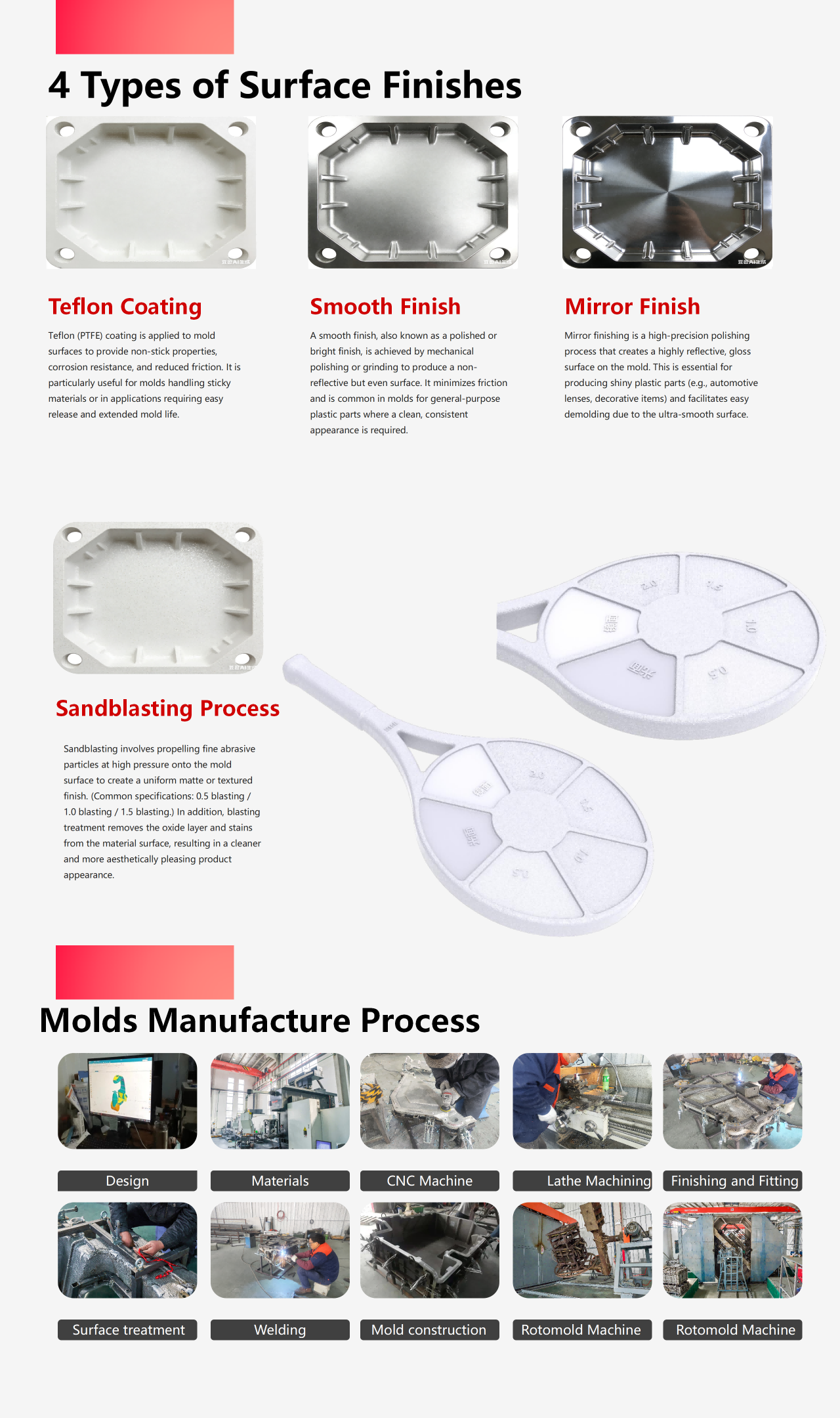
10.The Future Belongs to Full-Service Manufacturers
Customers increasingly prefer suppliers capable of providing complete manufacturing solutions rather than simply molding plastic parts.
The most competitive rotomolding companies will offer:
Product design support
DFM (Design for Manufacturing)
Mold design
Aluminum mold manufacturing
Rotational molding production
CNC machining
Foam insulation
Metal insert installation
Assembly
Quality inspection
Global logistics
Providing one-stop manufacturing services shortens development cycles, improves quality control, and strengthens long-term customer relationships.
Conclusion
The rotational molding industry is entering a transformative era. Future success will depend less on production capacity alone and more on technological capability, sustainability, intelligent manufacturing, advanced materials, and customer-focused engineering.
Companies that invest in automation, digital manufacturing, circular materials, and high-value customized products will be well positioned to capture opportunities in defense, renewable energy, agriculture, healthcare, food service, robotics, and industrial equipment.
Rather than competing solely on price, the next generation of rotational molding manufacturers will compete through innovation, engineering expertise, integrated services, and sustainable manufacturing practices. As global demand for durable, lightweight, and customized plastic products continues to grow, rotational molding is expected to remain one of the most adaptable and promising manufacturing technologies for the coming decade.