

Everyone is familiar with the rotational molding process and its wide range of applications. Rotomolded products can be found in many fields today. However, it is well known that producing rotomolded parts requires molds. The question of whether steel molds or aluminum molds are better for rotational molding is one that I believe should be answered based on the specific product. Let us briefly discuss this.

Comparing steel molds and aluminum molds for rotational molding—which one is more suitable for the rotomolding process? It has long been a topic of debate in the industry. In my opinion, it is a pointless and meaningless argument. If we really had to reach a conclusion, that conclusion would only serve mold manufacturers and would not be an objective or correct answer. Someone might still ask, “Which is better, aluminum molds or steel molds?” I can only respond by analogy: if you are going to buy a pair of shoes, would you say sports shoes are better or leather shoes? Obviously, the best choice is the one that suits you. Depending on personal preference or intended use, we choose different types of shoes. So, can we put an end to the debate over whether steel molds or aluminum molds are superior? The only answer is: whatever fits the application is better. Therefore, at the beginning of mold development, your objective, rational, and correct choice is what matters most.
That said, when developing a new rotomolded product, we must carefully consider which type of mold to select based on the product’s characteristics. This is crucial. Below is some information about steel and aluminum molds for rotational molding, provided for your reference.
Advantages and disadvantages of aluminum rotomolds
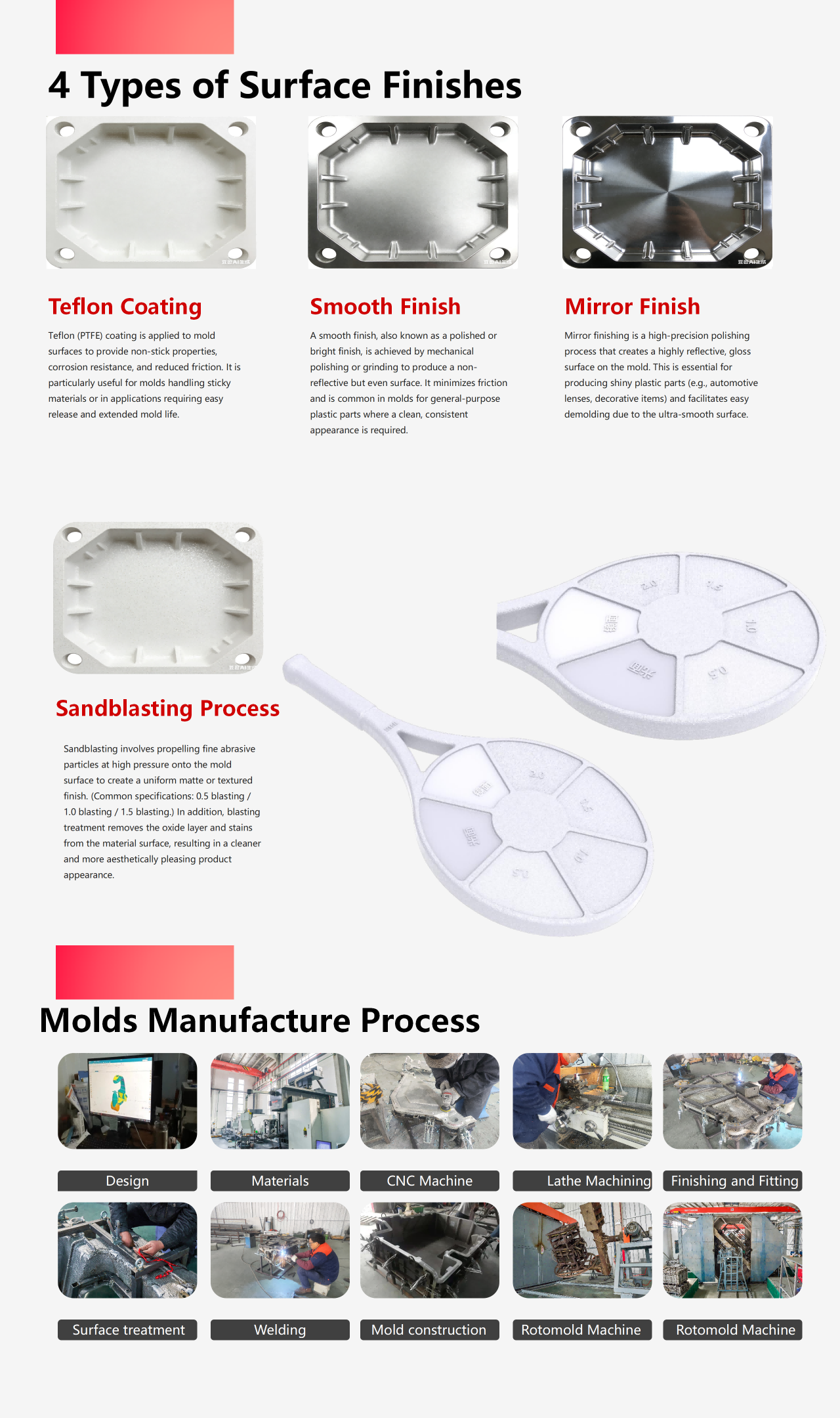
In terms of manufacturing processes, aluminum rotomolds are divided into cast aluminum molds and CNC‑carved aluminum plate molds. The former is a traditional process, with a workflow roughly as follows: drawing → wooden pattern → resin mold → casting → finishing. The latter is a product of the digital age, formed in one operation by CNC machining centers, offering advantages such as good appearance and high dimensional accuracy. The disadvantage is that the mold size is limited—large rotomolds cannot be made this way.
Cast aluminum molds and carved aluminum plate molds use cast aluminum or aluminum alloys as materials. In theory, aluminum’s good thermal conductivity should provide better heat transfer during the molding process and thus save energy. However, due to strength considerations, the average wall thickness of aluminum rotomolds is over 10 mm, which greatly reduces the expected advantage. In fact, compared with steel rotomolds, the molding cycle for aluminum molds is relatively longer. Moreover, the increased thickness makes aluminum molds heavier, placing additional load on the rotomolding machine. Additionally, due to the properties of aluminum, repairing aluminum rotomolds is quite troublesome.
Advantages and disadvantages of steel rotomolds
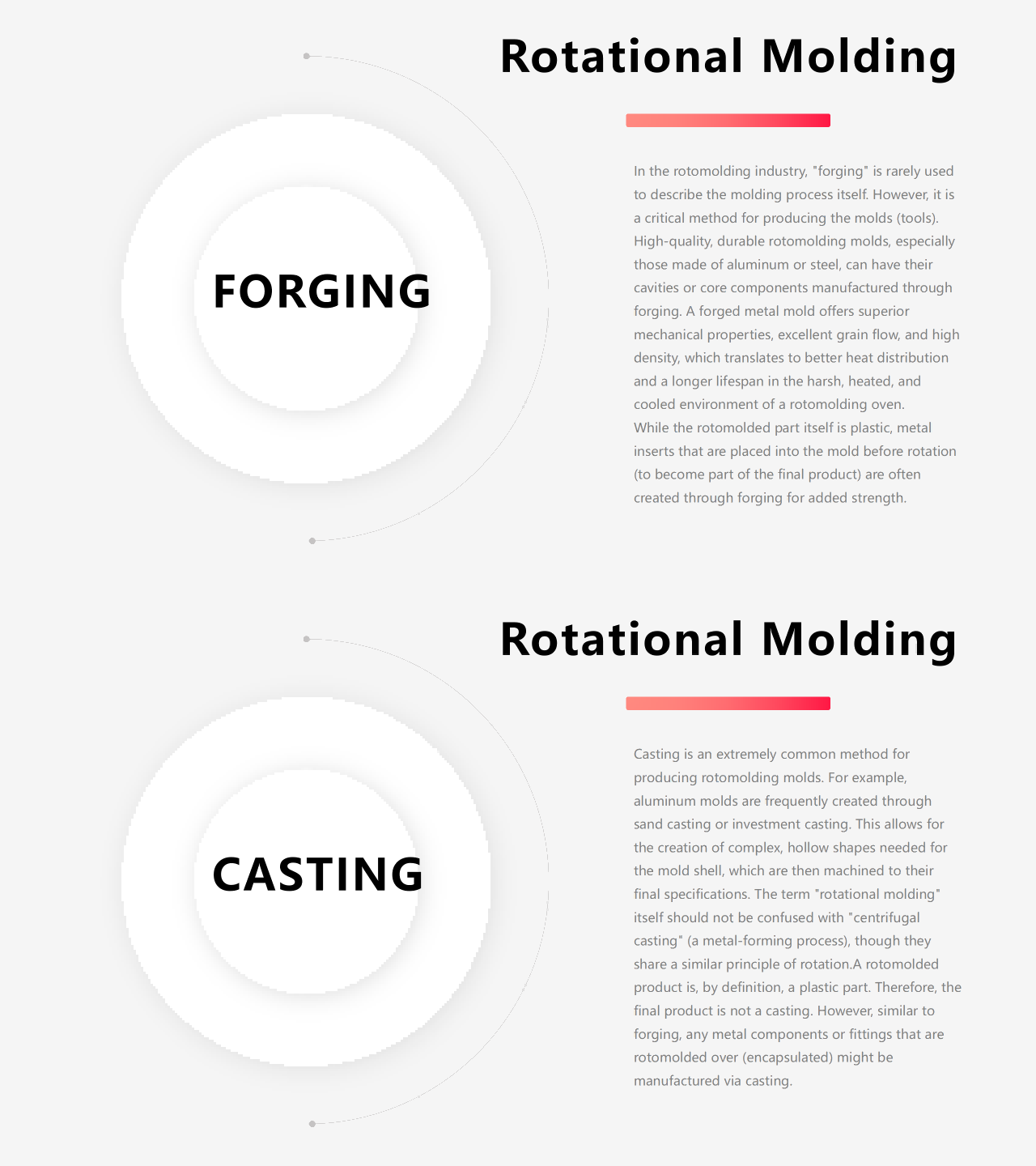
Compared with aluminum molds, steel rotomolds appeared much later, evolving from automotive sheet metal stamping mold technology. The technology is not yet fully mature, which is one reason why steel molds are not highly regarded by some in the industry. Nevertheless, steel rotomolds offer many advantages that aluminum rotomolds do not have:
Cost advantage:Except for very small rotomolds, using steel molds for medium‑sized molds can save at least one‑third of the mold cost.
Easier modification and repair:Steel molds are simpler to modify and maintain compared with aluminum molds.
Energy savings:The wall thickness of a steel mold is only 2.5 or 3.0 mm. During the rotomolding process, the melting time of the powder is shortened, reducing energy consumption to some extent.
Precision:By combining traditional processes with CNC technology, accurate steel rotomolds can also be produced.
In the rotomolding industry, steel molds are already quite widely used. I believe that with the continued development of rotomolding technology and a better understanding of steel molds among practitioners, the application of steel molds will see a new wave of demand.

Factory View
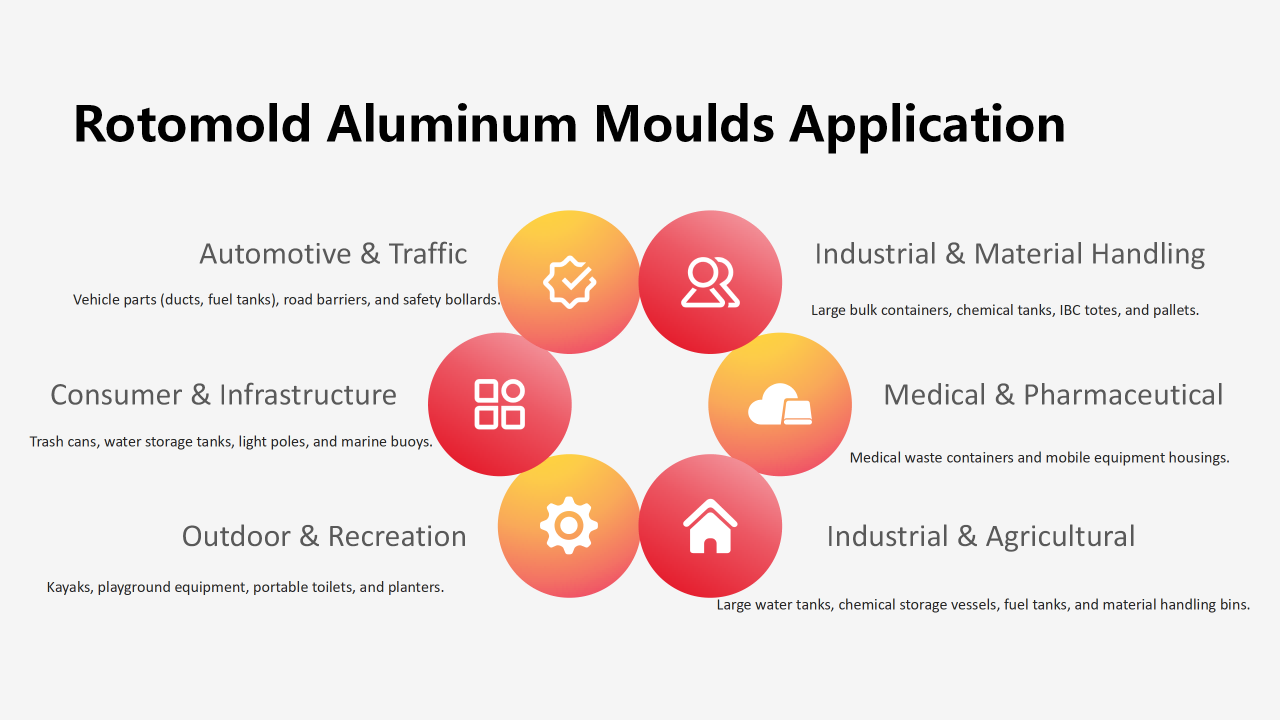
Jiangsu Qinbaote Equipment Manufacturing Co., Ltd. is an enterprise specializing in OEM manufacturing of rotomolds and rotomolded products. The company is located in Xinyuan Town, Siyang County, Suqian City, Jiangsu Province, close to the Shanghai, with convenient transportation and a clean, pleasant environment. The company has a domestic team of rotomolding engineers with more than 10 years of experience in the industry. We are well‑versed in the design and production of rotomolded sweeper shells, kayaks, military cases, construction vehicle fuel tanks, water tanks, food insulation boxes, and more. Our products are exported to dozens of countries including the United States, Germany, Italy, the United Kingdom, France, and Japan. Our rotomolding technology is at a leading level in China and is highly recognized and praised by domestic peers and customers.
Since its establishment, the company has adhered to the management philosophy of strict control, people‑orientation, collaborative innovation, and the pursuit of excellence, which has kept us in a strong position. Thanks to the concerted efforts of our employees, our business performance is steadily growing and flourishing.