

Lightweight Yet Extremely Durable Components
Rotational molding commonly utilizes High-Density Polyethylene (HDPE), a material known for its excellent strength-to-weight ratio.
Benefits of HDPE include:
1.Outstanding impact resistance
2.Excellent weatherability
3.Resistance to agricultural chemicals
4.Lightweight construction
5.Long service life
These characteristics make rotomolded components ideal for agricultural applications. Farmers benefit from equipment that withstands heavy use without adding unnecessary weight, improving fuel efficiency and reducing wear on machinery.

Tailored Solutions for Modern Farming
Rotational molding offers exceptional design flexibility, allowing manufacturers to produce highly customized components that meet specific agricultural requirements.
Common applications include:
- Urea tanks
- Hydraulic fluid tanks
- Seed hoppers
- Livestock feeders
- Water troughs
- Equipment toolboxes
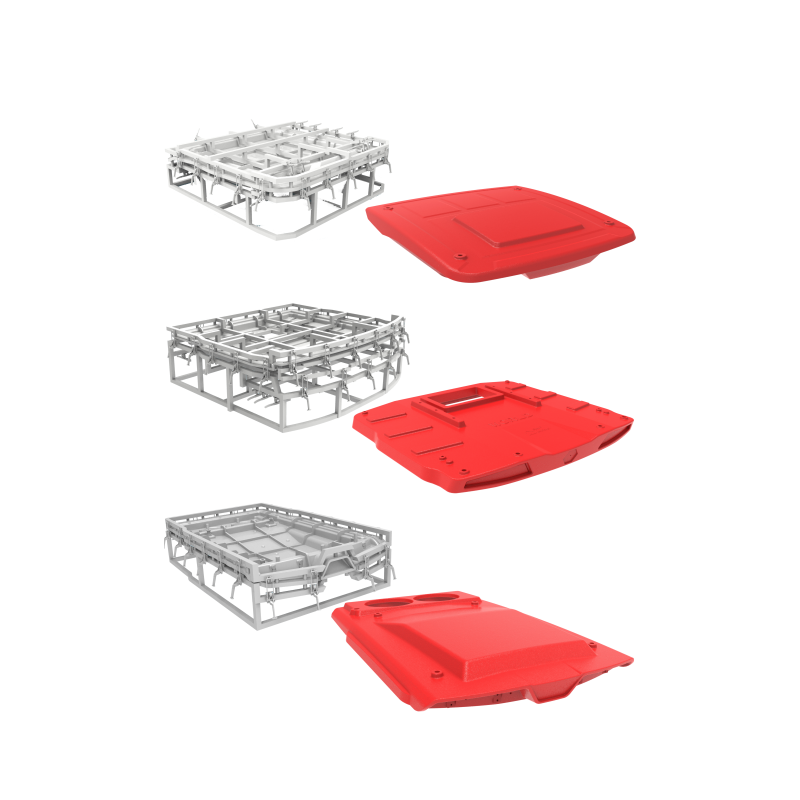
- Cab roof systems
- Dashboards
- Ventilation ducts
The process also supports rapid prototyping and shorter development cycles. Unlike injection molding, rotational molding requires significantly lower tooling investment, making design modifications more affordable and practical.
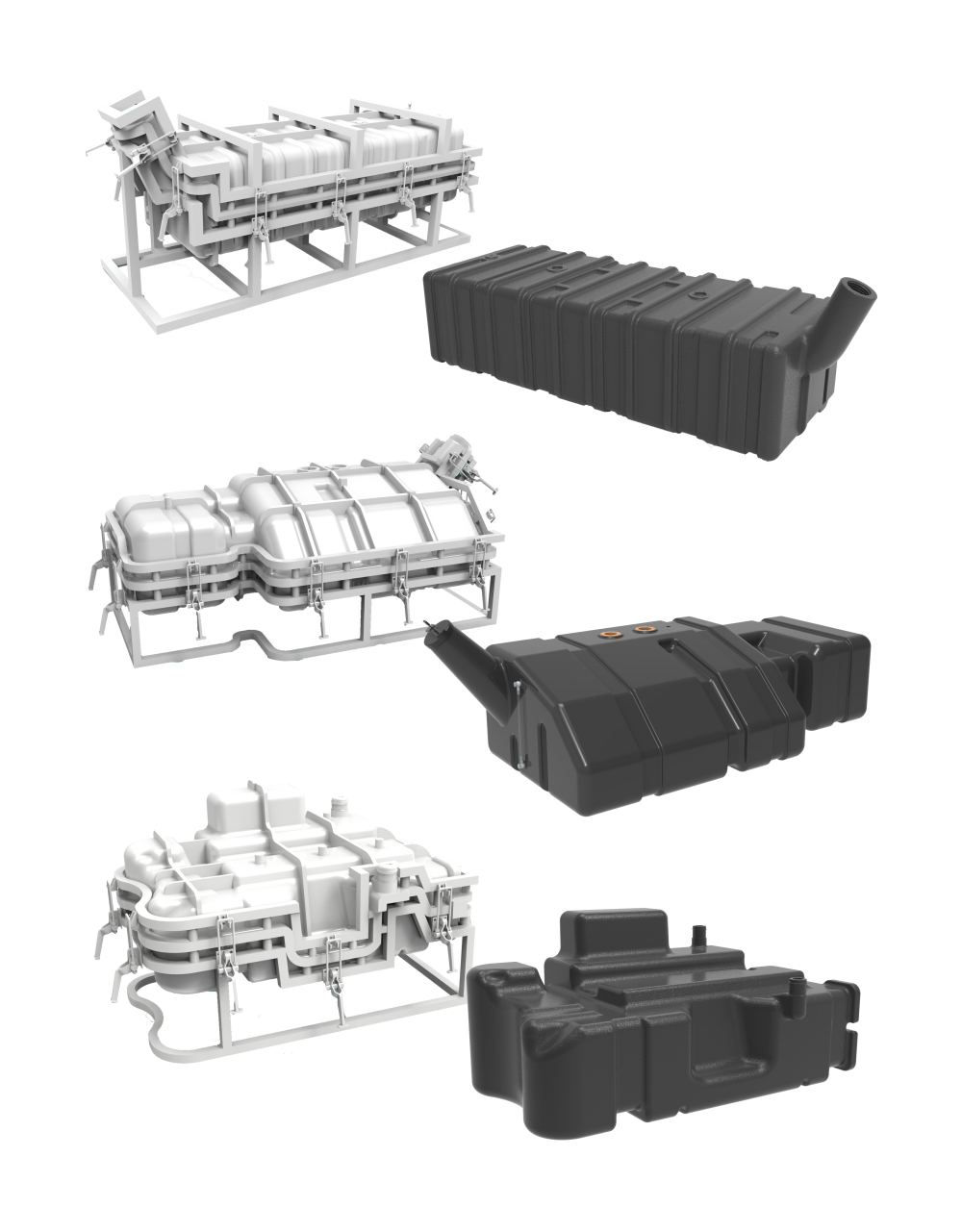
A recent agricultural tank development project demonstrated how multiple design revisions could be implemented quickly and cost-effectively to meet a customer's exact operational requirements.
Practical Applications and Cost Advantages in Agriculture
- Durability in Harsh Agricultural Environments
Agricultural equipment operates under some of the most demanding conditions imaginable. Machinery must endure:
- Extreme temperatures
- Constant UV exposure
- Heavy impacts
- Abrasive environments
Rotomolded components are specifically engineered to withstand these challenges. UV stabilizers can be incorporated into the material to protect against sun damage and extend outdoor service life.
Materials such as polypropylene (PP) and HDPE provide excellent heat resistance and impact strength. Even in cold-weather conditions, these materials maintain their toughness and structural integrity, ensuring reliable year-round performance.
- Excellent Chemical Resistance
Agricultural operations frequently involve exposure to fertilizers, pesticides, herbicides, and fuels. Equipment must withstand these aggressive chemicals without degradation.
Rotomolded products provide outstanding chemical resistance and are widely used for:
- Fertilizer storage tanks
- Chemical containment systems
- Pesticide tanks
- Agricultural fluid reservoirs
HDPE, one of the most commonly used rotational molding materials, offers exceptional resistance to agricultural chemicals, helping extend equipment lifespan and maintain safe operation.
- Longer Service Life and Lower Maintenance Costs
The combination of durability, chemical resistance, and seamless construction results in significant long-term savings.
Benefits include:
- Reduced maintenance requirements
- Fewer repairs
- Lower replacement costs
- Improved operational efficiency
- Reduced downtime
The seamless design prevents leaks and minimizes areas where dirt, chemicals, or contaminants can accumulate. This simplifies cleaning procedures and improves hygiene standards.
Farmers spend less time repairing equipment and more time focusing on productive farming activities.
- Cost-Effective for Low-Volume Production
Production economics are a major consideration in agricultural equipment manufacturing.
Compared with injection molding, rotational molding offers significantly lower tooling costs—often only one-third to one-quarter of the cost of comparable injection molds.
This makes rotational molding ideal for:
- Small production runs
- Medium-volume manufacturing
- Prototype development
- Custom agricultural equipment
While injection molding becomes economical at very high production volumes, rotational molding is highly cost-effective for production quantities ranging from approximately 50 to 5,000 units.
This flexibility enables agricultural equipment manufacturers to produce specialized products without the substantial upfront investment associated with traditional tooling.
- Advanced Features and the Future of Agricultural Equipment
Wide Range of Agricultural Applications
Rotational molding is used throughout modern agriculture for manufacturing:
- Water tanks
- Seed containers
- Livestock feeders
- Irrigation components
- Drinking troughs
- Feed bins
- Crop-growing containers
- Protective equipment housings
The process accommodates complex geometries, smooth curves, transition sections, and integrated reinforcement ribs without compromising strength or durability.
Additional features such as molded-in inserts, fittings, and steel reinforcements can also be incorporated directly into the design.
- Integrating Antimicrobial Technology for Better Hygiene
Hygiene is becoming increasingly important across agricultural applications.
Modern rotational molding processes can incorporate antimicrobial additives such as silver-ion technologies that inhibit the growth of bacteria, mold, and other microorganisms.
Benefits include:
- Improved sanitation
- Extended product life
- Reduced microbial contamination
- Easier maintenance
- Better suitability for food and water storage applications
These technologies are particularly valuable for water tanks, feed storage containers, and other moisture-prone agricultural equipment.
The Future of Rotational Molding Technology
The future of agricultural equipment manufacturing is closely tied to continued advancements in rotational molding.
Key innovations include:
Advanced Materials
New generations of HDPE and cross-linked polyethylene (PEX) offer superior impact resistance, durability, and performance.
Sustainable Manufacturing
The increasing use of recycled plastics supports environmental sustainability while maintaining product quality.
Multi-Layer Molding
Multi-layer construction enables enhanced insulation, increased strength, and specialized performance characteristics.
Smart Manufacturing
Integrated sensors and digital monitoring systems improve process control, reduce defects, and enhance product consistency.
Topology Optimization
Advanced design optimization techniques can reduce tank weight by more than 25% while maintaining structural integrity and functionality.
Conclusion
Rotational molding has become a critical manufacturing technology for modern agriculture. Its combination of durability, customization, chemical resistance, and cost efficiency enables the production of high-performance agricultural equipment that meets the evolving needs of farmers and equipment manufacturers alike.
As innovations such as antimicrobial technology, sustainable materials, and smart manufacturing continue to advance, rotational molding is poised to become a cornerstone of efficient, productive, and sustainable agriculture well beyond 2026.
Frequently Asked Questions
1.What makes rotomolded agricultural components so durable?
Rotomolded products feature seamless one-piece construction and utilize high-performance materials such as HDPE. They resist impacts, chemicals, UV exposure, and harsh weather conditions, making them ideal for demanding agricultural environments.
2.How does rotational molding help farmers save money?
Rotational molding offers lower tooling costs, especially for low-volume production. Additionally, the resulting components require less maintenance, last longer, and reduce replacement expenses, generating long-term cost savings.
3.Can rotational molding be used to manufacture custom agricultural equipment?
Absolutely. Rotational molding provides extensive design flexibility and is ideal for producing customized tanks, feeders, storage systems, enclosures, and other agricultural components tailored to specific farming requirements.
