


Rotational molding is transforming the agricultural equipment industry. With unmatched durability, customization flexibility, and cost efficiency, this innovative manufacturing process is redefining how farmers design, use, and maintain agricultural equipment. As the global agricultural machinery market continues to grow into a multi-billion-dollar industry by 2026, advanced production technologies such as rotational molding are becoming increasingly essential.
Key Takeaways
Rotational molding produces exceptionally durable agricultural equipment through seamless, one-piece construction that resists impact, chemicals, and harsh weather conditions.
Farmers can obtain highly customized components tailored to their specific operational needs while maintaining cost-effective production, even for low-volume runs.
Advanced rotational molding technologies now incorporate antimicrobial additives, recycled materials, and smart manufacturing innovations, helping create more efficient and sustainable farming solutions.
What Is Rotational Molding?
Rotational molding (rotomolding) is a specialized manufacturing process used to produce hollow, seamless plastic components. The process begins by loading powdered plastic resin, most commonly polyethylene, into a hollow mold. The mold is then heated in an oven while rotating simultaneously on two axes at controlled speeds.
As the resin melts, it evenly coats the interior surface of the mold. Once heating is complete, the mold enters a cooling stage where air or water is used while rotation continues. This ensures uniform wall thickness and proper material distribution. After cooling, the finished part is removed from the mold, often with the assistance of a mold release agent.
Seamless One-Piece Design for Superior Strength
One of the greatest advantages of rotational molding is its ability to produce components as a single piece. This eliminates weak points such as seams, welds, or joints that are common in other manufacturing methods.
The seamless structure offers:
- Enhanced structural strength
- Reduced risk of leaks
- Improved impact resistance
- Longer service life in demanding agricultural environments
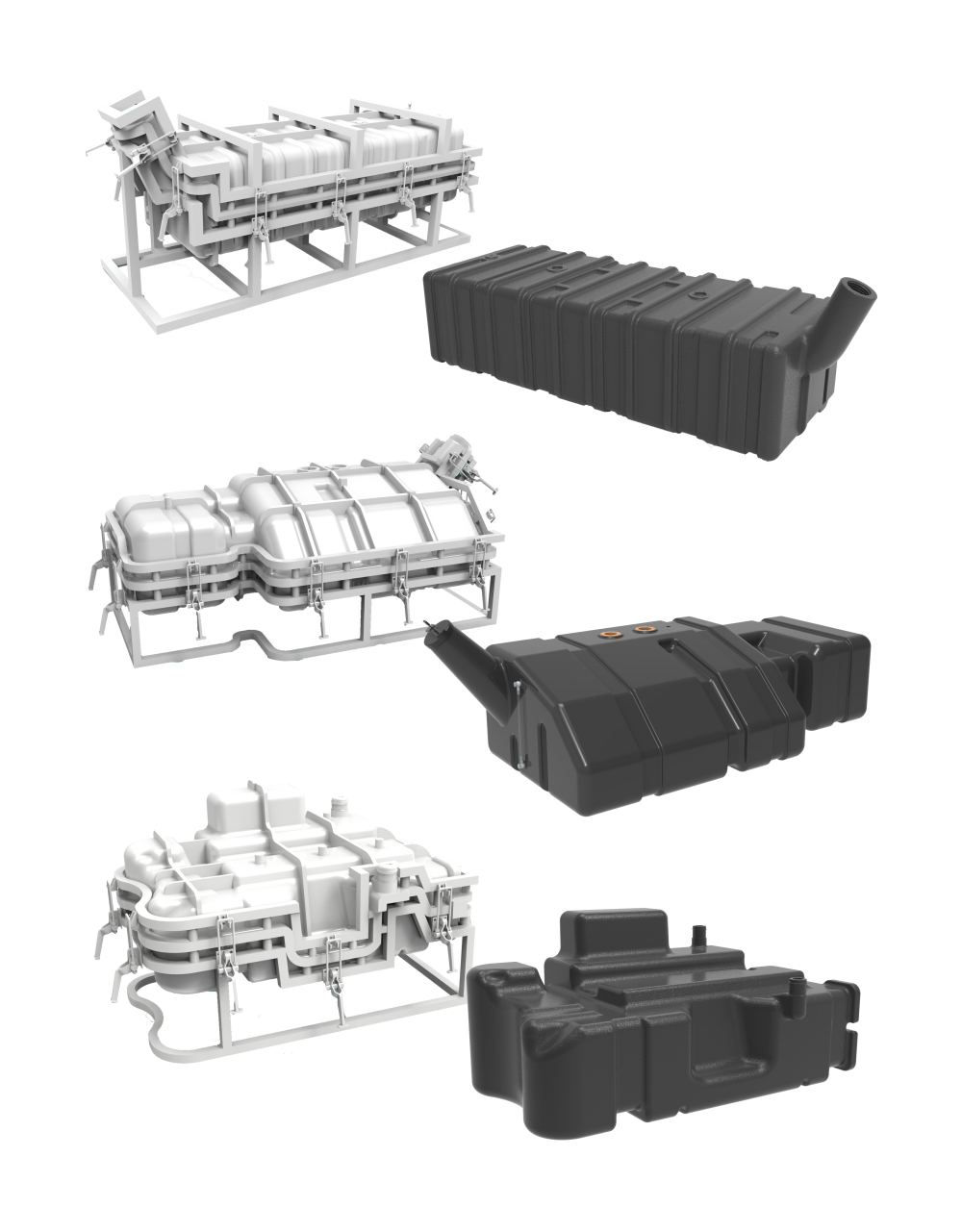
This is particularly important for agricultural tanks, barriers, and protective covers. Rotomolded products feature uniform wall thickness and flexible material properties that absorb impacts without cracking or breaking.

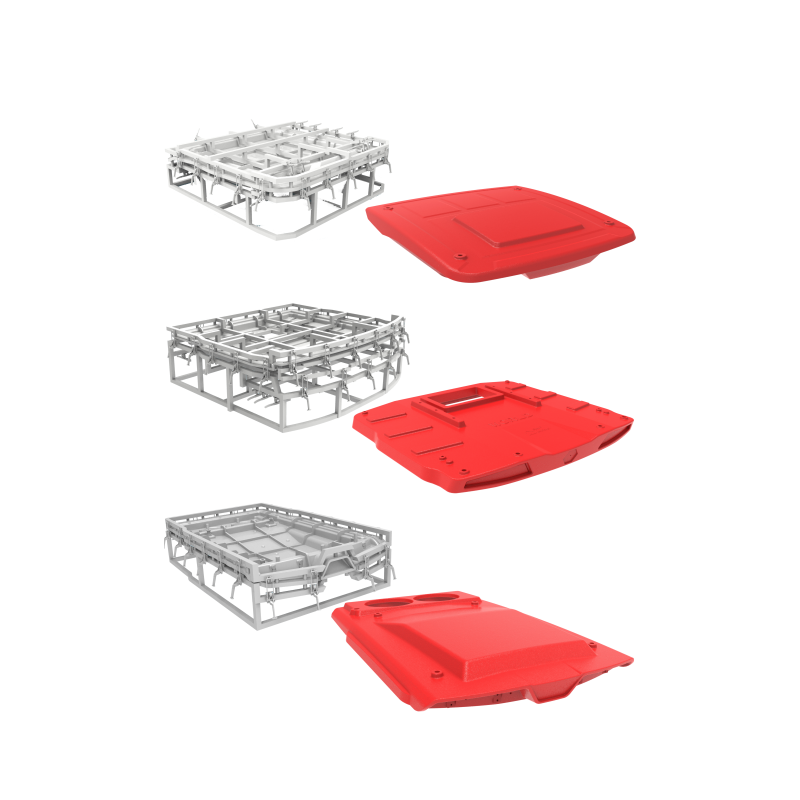
For example, large combine harvester covers measuring up to 6 ft × 6 ft can be molded as a single piece with integrated reinforcing ribs for added strength and weather resistance. One-piece housings can replace multiple assembled components, reducing labor requirements and minimizing potential failure points.
Planting trays, hydroponic system components, and seedling trays also benefit from seamless construction, which reduces areas where dirt and bacteria can accumulate and makes cleaning significantly easier.